
Serviced apartment furniture needs to support a different lifestyle from standard hotel furniture. Guests stay…
Hotel Furniture Materials Guide: Veneer, Laminate, Lacquer and Hardware
Hotel furniture materials decide more than the look of a room. They affect cost, weight, durability, cleaning, repair, production time and even whether a project passes internal approval.
For many buyers, the hard part is not choosing the most expensive material. It is choosing the right material for the hotel level, climate, room usage and budget. A city hotel, beach resort, serviced apartment and luxury villa can all need different decisions.
This hotel furniture materials guide explains the common options buyers should discuss before ordering custom hotel furniture.
If you need material advice for a live project, start from CH’s custom hotel furniture service page.
Start With the Project Positioning
Before choosing hotel furniture materials, define the type of property. A five-star resort may prioritize natural texture, custom finishes and a strong design story. A business hotel may need durable surfaces, easy cleaning and fast replacement. A serviced apartment may need furniture that feels residential but survives long-term use.
Ask these questions first:
- What is the hotel category?
- How many rooms are in the project?
- Is it a new build or renovation?
- What is the target opening date?
- Will guests stay short-term or long-term?
- Is the climate humid, dry or coastal?
- Are there special fire, emission or sustainability requirements?
Good hotel furniture materials are chosen for the project, not only for the sample room.
Plywood, MDF and Panel Structure
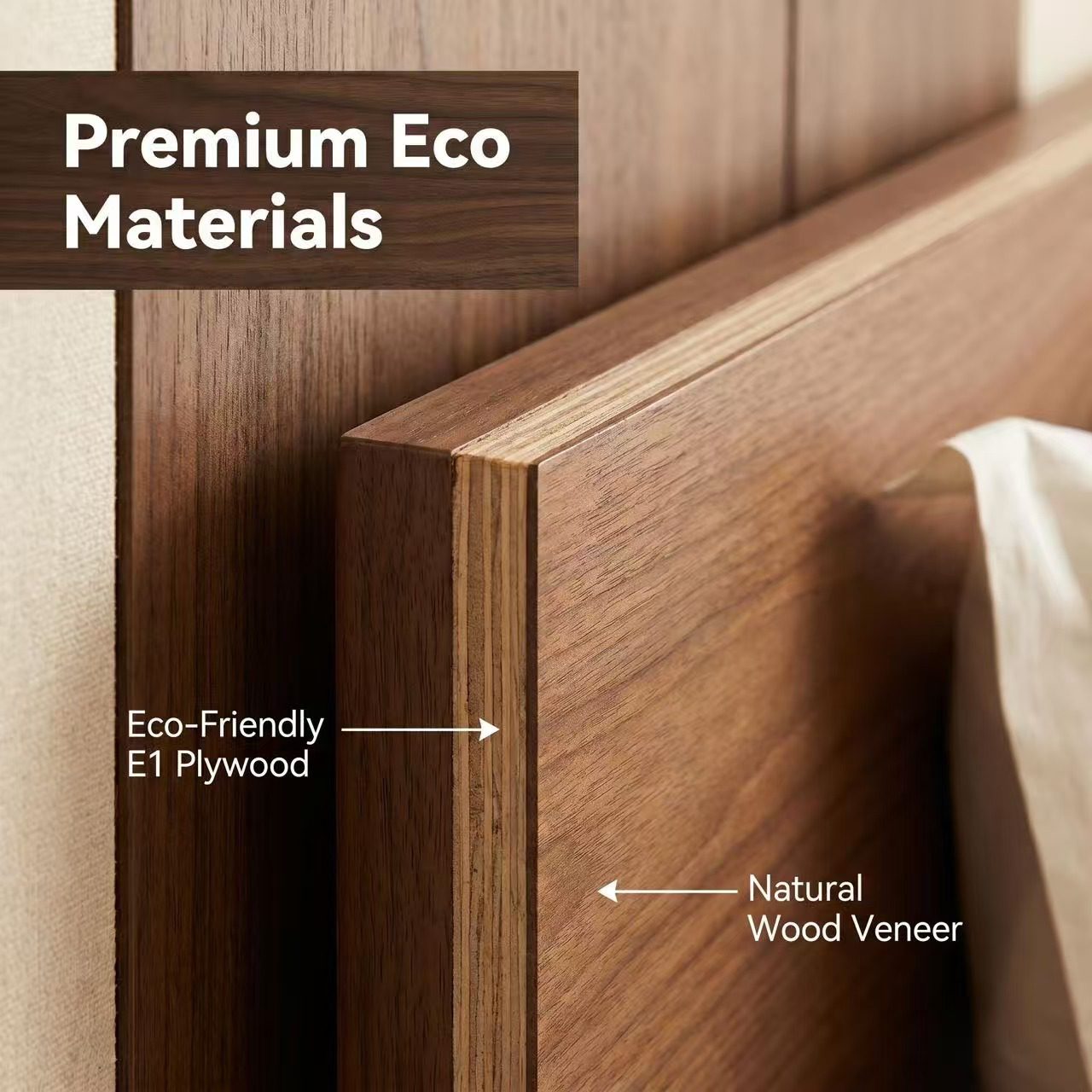
Most hotel casegoods are built from panel materials such as plywood or MDF, often with veneer, laminate or lacquer finishes. The panel structure affects strength, flatness, screw holding, weight and price.
Plywood is often valued for stability and strength. MDF is useful for smooth painted or lacquered surfaces. The right choice depends on the product type and design. A wardrobe, headboard, desk and curved panel may not use the same internal structure.
When discussing panel structure with a supplier, ask about:
- Board thickness
- Edge treatment
- Moisture resistance needs
- Screw holding requirements
- Surface finish compatibility
- Formaldehyde or emission documents if required
Do not specify a material only because another project used it. Match the structure to the design and use.
For projects entering supplier review, connect this section to your quality control page so buyers understand how materials are checked before production.
Natural Veneer
Veneer gives hotel furniture a warmer, more natural look. It is often used in upscale hotels, resorts, suites and public areas where texture matters.
The advantages of veneer include:
- Natural wood appearance
- Premium design feeling
- Many species and cut options
- Good match with stained finishes
- Suitable for custom luxury projects
The limits are also important. Veneer is a natural material, so color and grain can vary. It needs careful sample control, batch control and finish approval. If a buyer expects every panel to look exactly identical, veneer may require extra explanation.
For veneer hotel furniture materials, confirm:
- Wood species
- Veneer cut
- Grain direction
- Stain color
- Gloss level
- Edge details
- Approved control sample
Veneer can be beautiful, but it should be managed carefully in bulk production.
Laminate
Laminate is a practical choice for many hotels because it is durable, consistent and easier to maintain. It is often used for business hotels, serviced apartments, renovation projects and high-use areas.
Benefits of laminate include:
- Consistent color and pattern
- Good scratch resistance depending on grade
- Easier cleaning
- Faster approval when using standard codes
- Useful for large room quantities
The design concern is that low-quality laminate can look flat or cheap. Buyers should choose a finish that fits the hotel level and request real sample boards before approval.
For laminate hotel furniture materials, confirm the exact brand, code, thickness, texture and edge matching. If an equivalent material is allowed, define the approval process before production.
Lacquer and Painted Finishes
Lacquer can create a clean, refined surface for hotel furniture. It works well for modern interiors, painted panels and custom color schemes.
Key points to confirm:
- Matte, semi-matte or glossy finish
- Color code or approved sample
- Surface smoothness
- Scratch expectations
- Cleaning method
- Repair process
Lacquer quality depends heavily on preparation and finishing control. Dust, uneven color or poor curing can ruin the result. If lacquer is used on a large hotel project, sample approval and factory finish control are essential.
Solid Wood
Solid wood may be used for legs, frames, decorative parts, chair structures or premium details. It can add strength and natural value, but it also moves with humidity and requires careful processing.
For hotel projects, solid wood should be specified with realistic expectations. It is not always the best material for large flat panels. In many cases, a well-made engineered panel with veneer is more stable for casegoods.
Discuss wood drying, joinery, finish and climate conditions before approving solid wood parts.
Upholstery Materials
Hotel loose furniture often includes sofas, lounge chairs, desk chairs, benches and stools. Upholstery decisions affect comfort, cleaning and safety.
Buyers should confirm:
- Fabric, leather or synthetic leather
- Abrasion resistance
- Color fastness
- Foam density
- Fire-retardant requirements
- Stitching details
- Removable or fixed cushions
For public areas, fabric must handle heavier use than a private home. For beach resorts, moisture and cleaning conditions matter.
Hardware
Hardware is easy to underestimate. Hinges, drawer slides, handles and connectors decide how furniture feels after months of guest use.
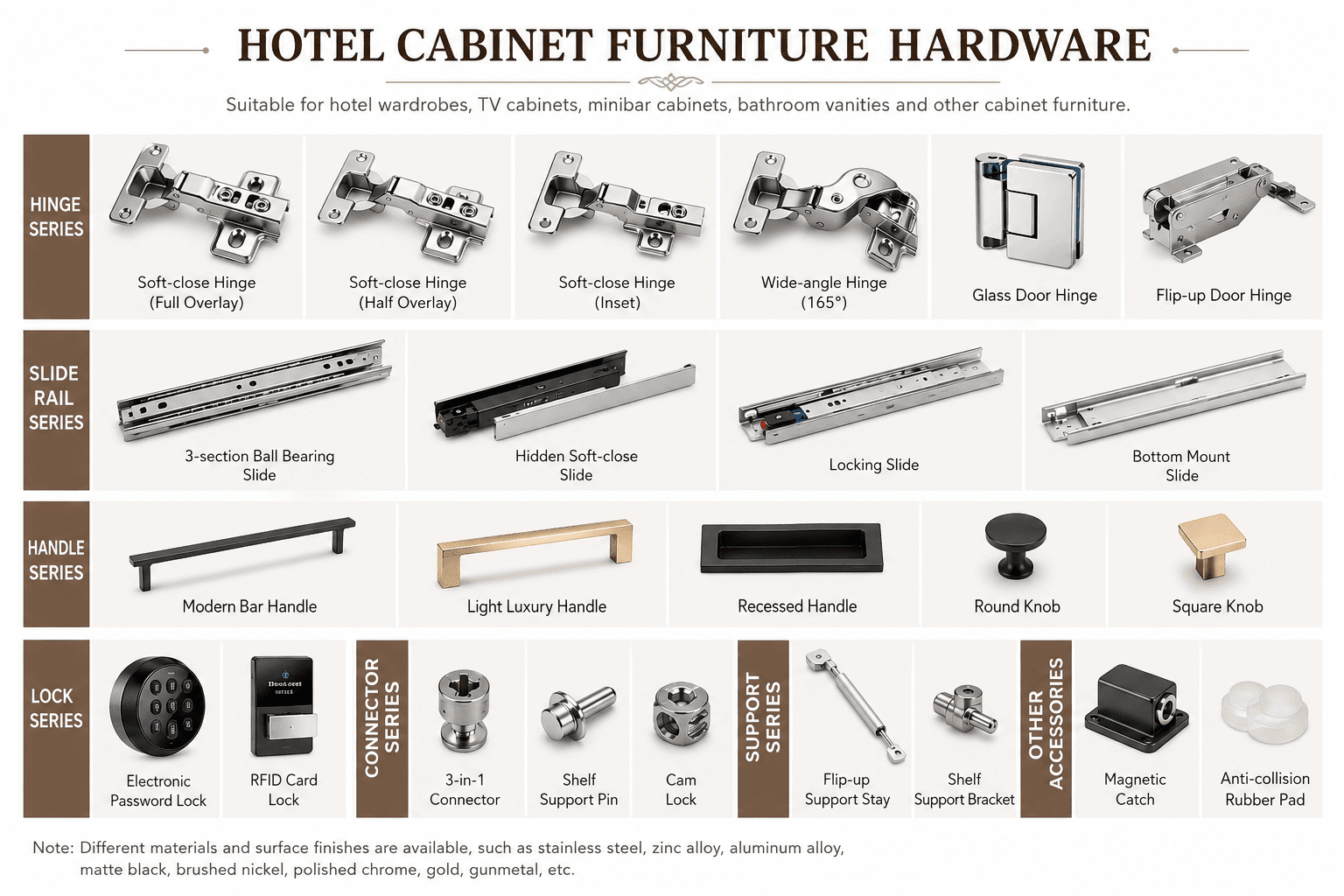
For hotel furniture hardware, discuss:
- Soft-close or standard hinges
- Drawer slide load rating
- Handle material and finish
- Adjustable feet
- Wall fixing requirements
- Spare hardware
- Brand or approved equivalent
Hardware should be included clearly in the quotation. If the supplier uses an equivalent, it should be approved before production.
Environmental and Compliance Documents
Some projects require formal documents for wood origin, emissions, environmental management or product safety. CH’s company materials mention ISO9001, ISO14001, environmental product certifications and related documents. Current certificates should be verified before use.
Depending on the market, buyers may ask about:
- FSC or traceable wood options
- Formaldehyde emission documents, including market-specific rules such as the U.S. EPA’s composite wood formaldehyde standards
- Low-VOC finish options
- Fire-retardant upholstery tests
- Environmental management certification
Put these requirements in writing at the quotation stage.
Current certificates can be organized on a dedicated certifications page for buyer due diligence.
Best Practice: Approve a Complete Material Board
A material board should include the main finish, edge detail, metal finish, fabric or leather, hardware sample and any special decorative parts. For hotel furniture materials, this board becomes the visual and technical reference for the project.
Keep the approval process simple:
- Supplier prepares samples.
- Designer and owner review under proper lighting.
- Revisions are recorded.
- Final sample is signed or confirmed in writing.
- Factory uses the approved sample for production control.
FAQ
What are the most common hotel furniture materials?
Common materials include plywood, MDF, veneer, laminate, lacquer, solid wood parts, metal hardware, fabric, leather and synthetic leather.
Is veneer better than laminate for hotel furniture?
Not always. Veneer gives a natural premium look, while laminate can offer consistency and durability. The better choice depends on hotel level, budget, maintenance and design intent.
What material is best for hotel casegoods?
Hotel casegoods often use plywood or MDF with veneer, laminate or lacquer finishes. The best structure should be confirmed according to product design and project requirements.
Should buyers ask for material samples?
Yes. Material samples and finish boards are essential for custom hotel furniture because they reduce misunderstanding before bulk production.
Can CH Hotel Furniture advise on materials?
Yes. Buyers can send drawings, reference photos, budget level and project requirements. CH can review suitable material options for custom hotel furniture.
Not sure which hotel furniture materials fit your project? Send your drawings, finish references and target budget to CH Hotel Furniture for practical material advice.
Related Posts