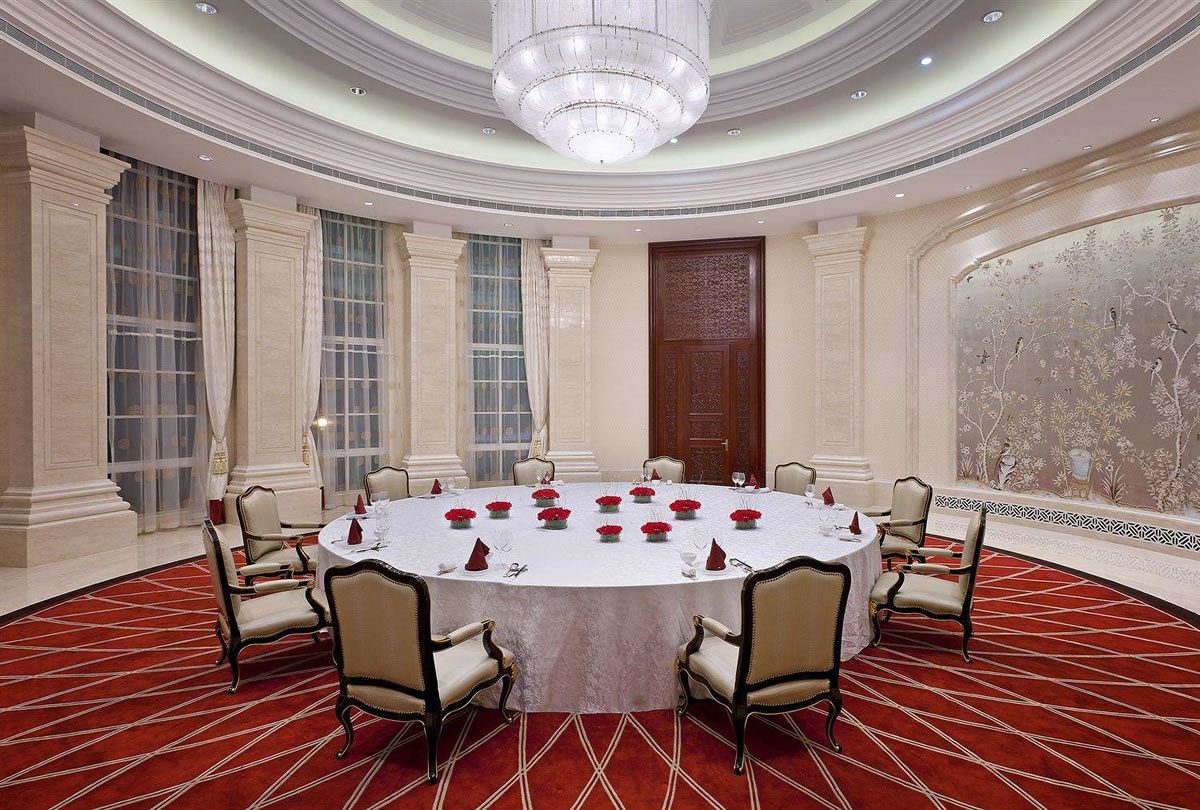

Hotel banquet furniture needs to support a fast-moving operational environment. Function rooms often shift between…
Hotel Wardrobe Design Guide for Better Storage Planning
Hotel wardrobe design affects much more than storage alone. It shapes how guests organize their belongings, how comfortably they use the room, and how clean the layout feels overall. In hospitality projects, a wardrobe should be visually integrated, easy to use, and durable enough for repeated daily turnover.
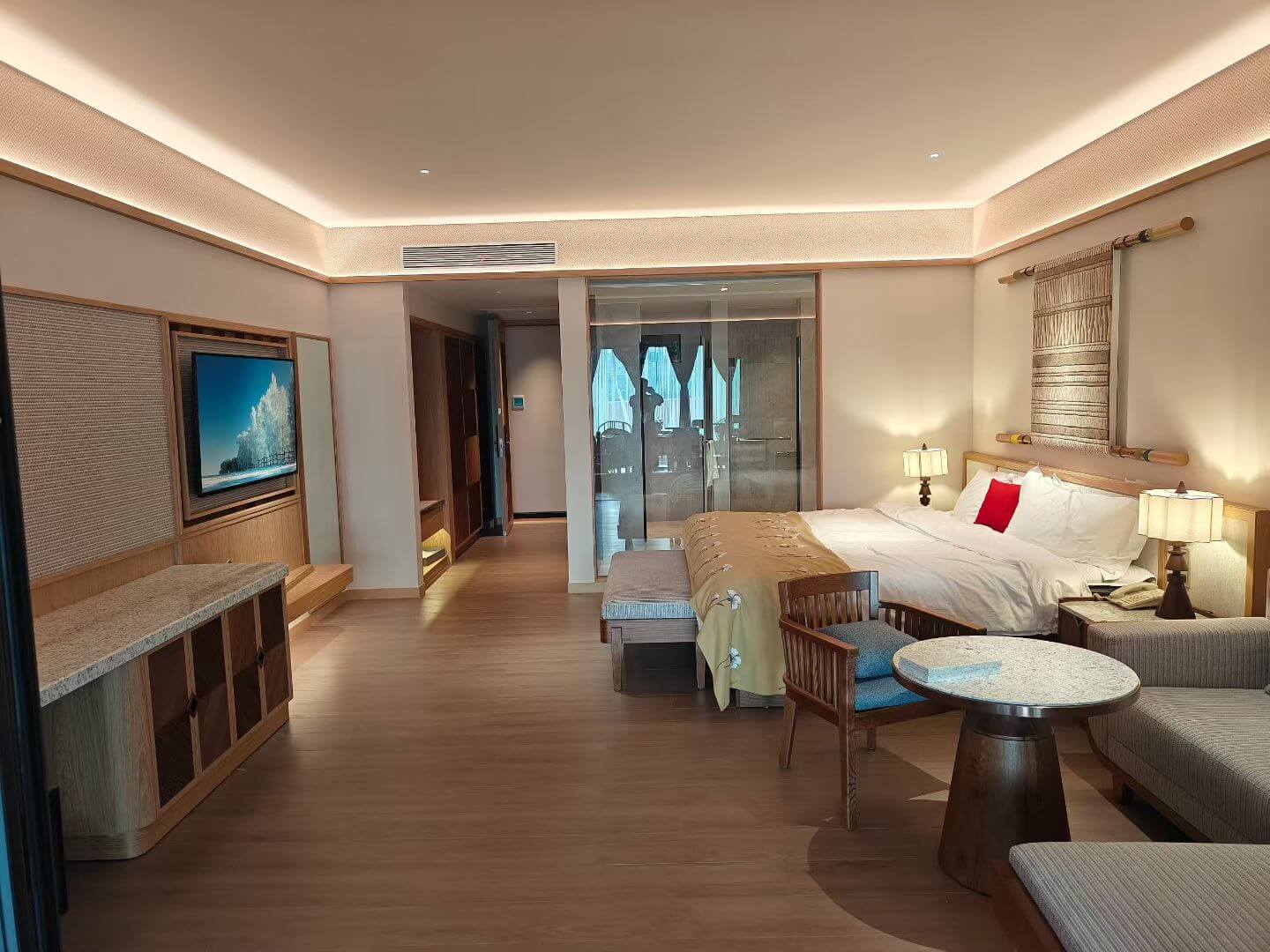
A well-planned wardrobe can improve the room experience immediately. Guests notice whether there is enough hanging space, whether shelves are practical, whether suitcases fit comfortably, and whether the wardrobe opens in an easy and logical way. Small details often influence the user experience more than people expect.
Storage Planning Should Match Room Type
Different room categories need different wardrobe logic. A short-stay business hotel may need efficient hanging space and simple drawer storage. A suite or longer-stay room may require larger compartments, more shelving, luggage support, and additional internal organization.
That is why hotel wardrobe design should always be reviewed with room type, guest profile, and expected stay duration in mind. A wardrobe that works well in one property may not suit another because usage patterns are different.
Ease of Use Matters to Guests and Housekeeping
A wardrobe should not feel complicated. Doors should open smoothly, shelves should be reachable, and hanging space should make sense for the room category. If storage is difficult to use, the room feels less convenient even if it looks polished.
Wardrobe planning also affects housekeeping. Clear internal organization helps rooms stay neater and makes day-to-day maintenance easier. This is especially useful in higher occupancy properties where speed and consistency matter.
Construction Quality Supports Long-Term Performance
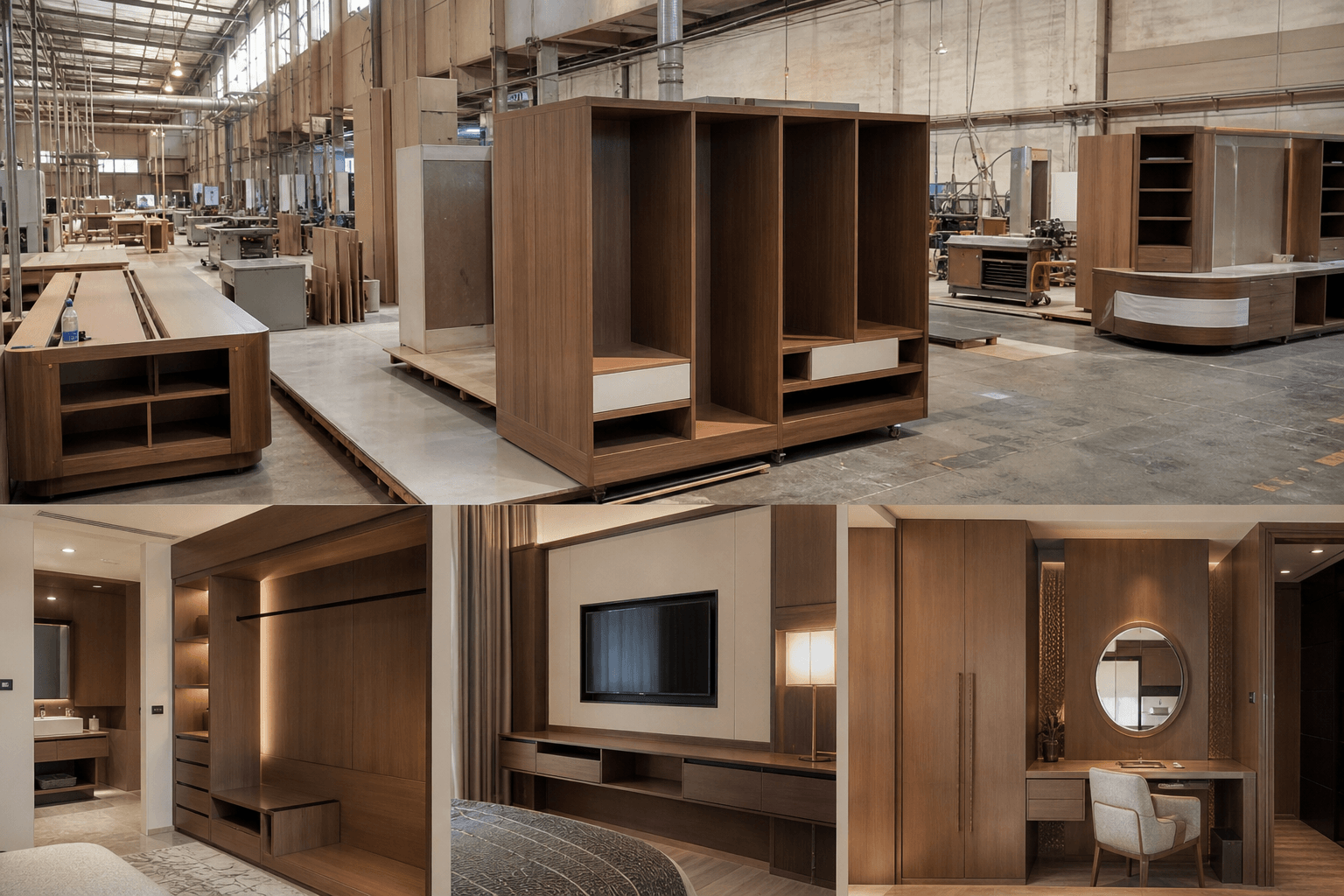
Wardrobes receive constant contact. Hinges, drawer runners, handles, shelf brackets, edge conditions, and finish stability all affect how well the piece performs over time. In hospitality use, durability matters just as much as layout.
Strong hotel wardrobe design combines practical storage logic with reliable construction. If the internal arrangement is smart but the hardware is weak, the long-term result still suffers. This is why technical review and material choice should both be taken seriously.
Visual Integration Helps the Room Feel More Refined
A wardrobe is often one of the largest pieces in the room. Because of that, it strongly affects the visual balance of the entire interior. The scale, door layout, finish tone, handle style, and relationship with surrounding furniture all contribute to how polished the room feels.
You can explore suite and guest room furniture here. You can also browse full hotel furniture categories here. For hospitality design references, see Hospitality Design.
Why is hotel wardrobe design important?
It improves storage convenience, guest comfort, and the practical function of the room.
What should a hotel wardrobe include?
It may include hanging space, shelves, drawers, luggage placement, a safe, and sometimes minibar or laundry sections.
Can hotel wardrobes be customized?
Yes. They are usually customized based on room type, layout, storage demand, and design style.
Does wardrobe design affect room appearance?
Yes. Because wardrobes are large visual elements, they strongly influence how balanced and refined the room feels.
Related Posts