
Serviced apartment furniture needs to support a different lifestyle from standard hotel furniture. Guests stay…
Hotel Casegoods vs Loose Furniture: What Buyers Should Know Before Ordering
Hotel furniture buyers often use one simple word for everything: furniture. In practice, a hotel project usually includes two very different groups: built-in case pieces and loose furniture.
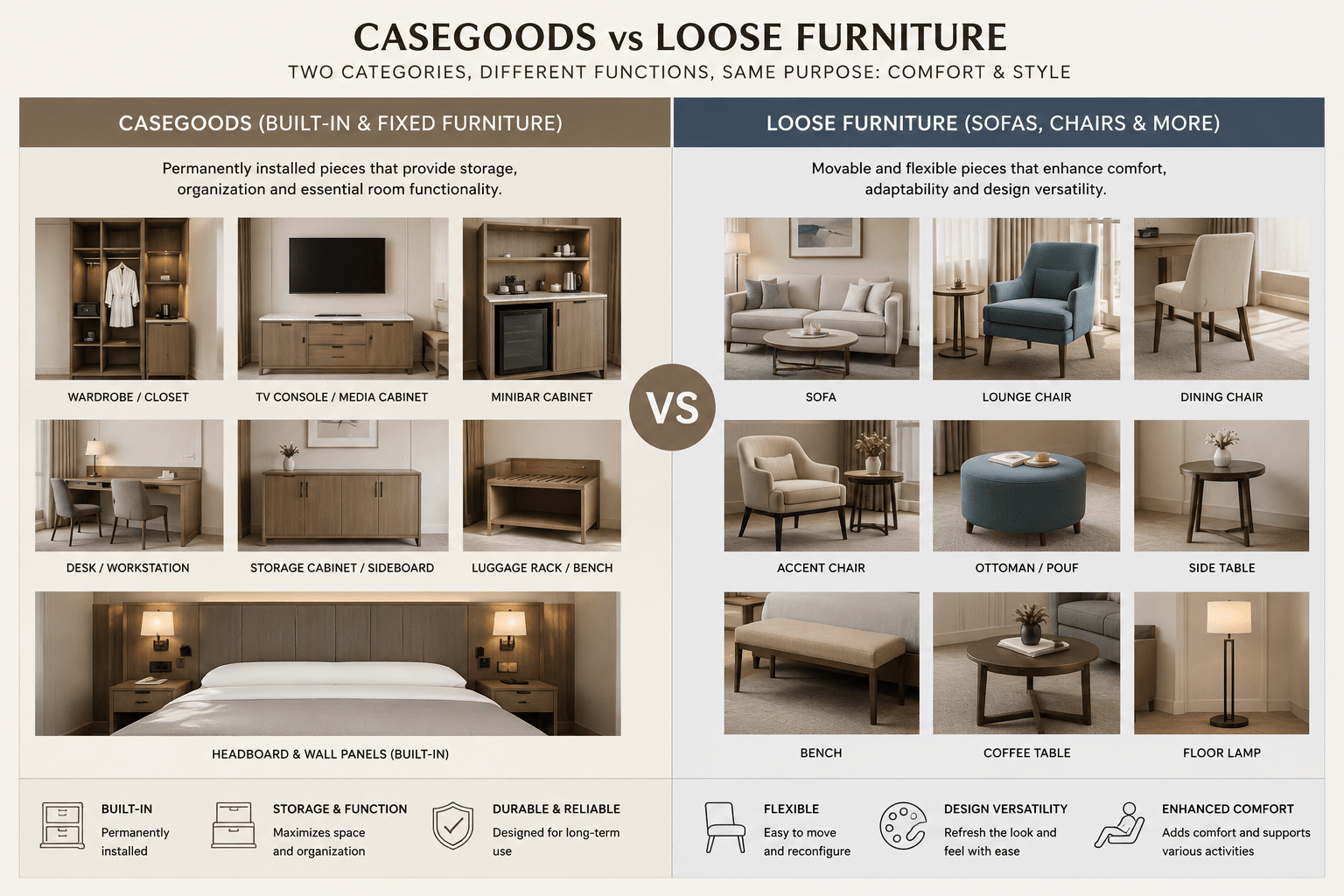
Understanding the difference helps owners, designers and procurement teams prepare clearer BOQs, compare quotations more fairly and avoid production problems. A headboard is not sourced the same way as a lounge chair. A wardrobe does not follow the same approval process as a sofa. Both may belong in the same room, but they are made, checked and installed differently.
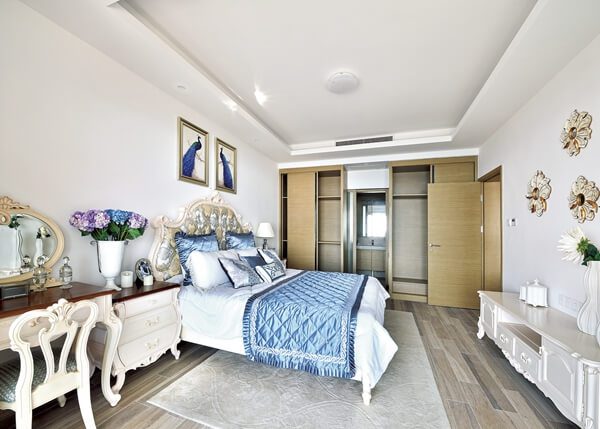
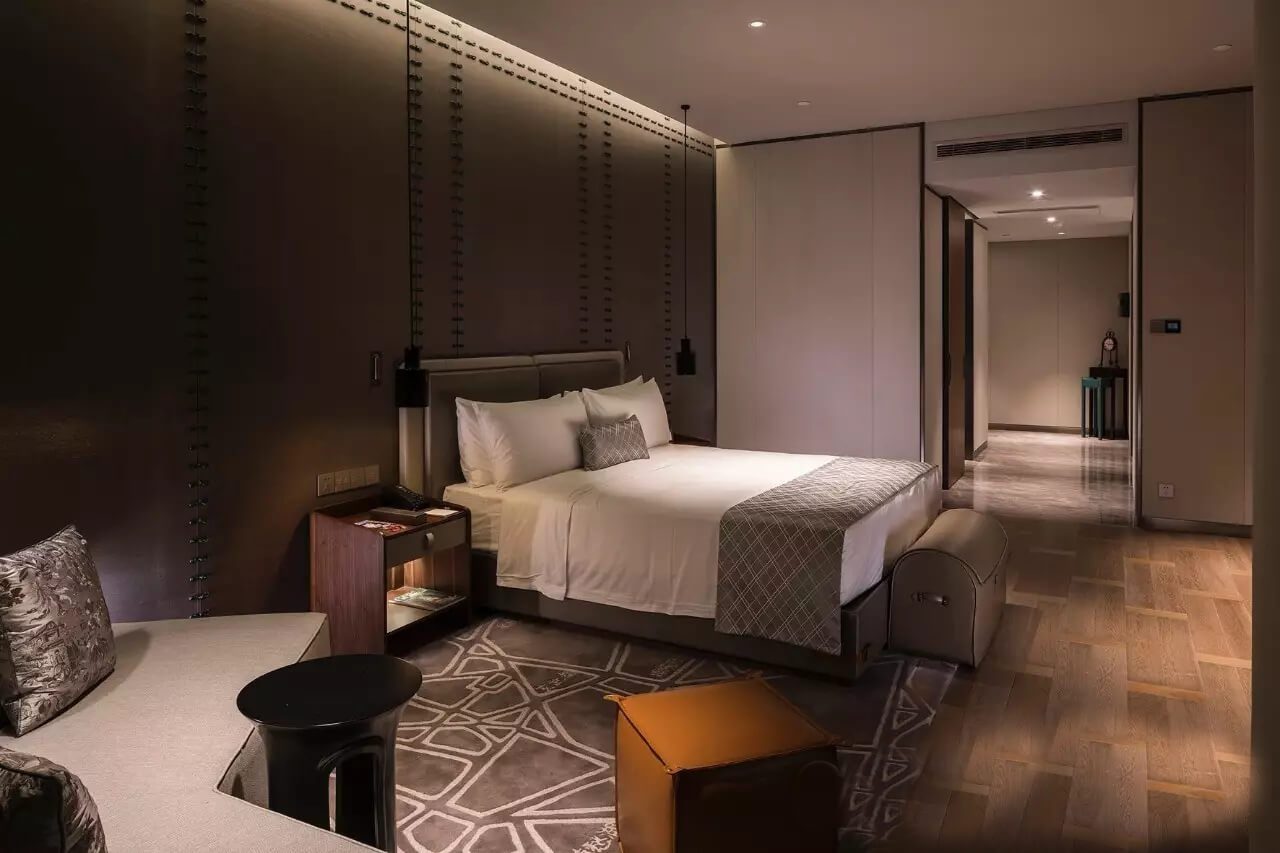
For buyers building a full room package, CH’s hotel bedroom furniture page is the natural place to start.
What Are Hotel Casegoods?
Hotel casegoods are built furniture pieces, usually made from panels, veneer, laminate, lacquer, hardware and sometimes metal or stone details. They are common in guest rooms, suites, apartments and back-of-house spaces.
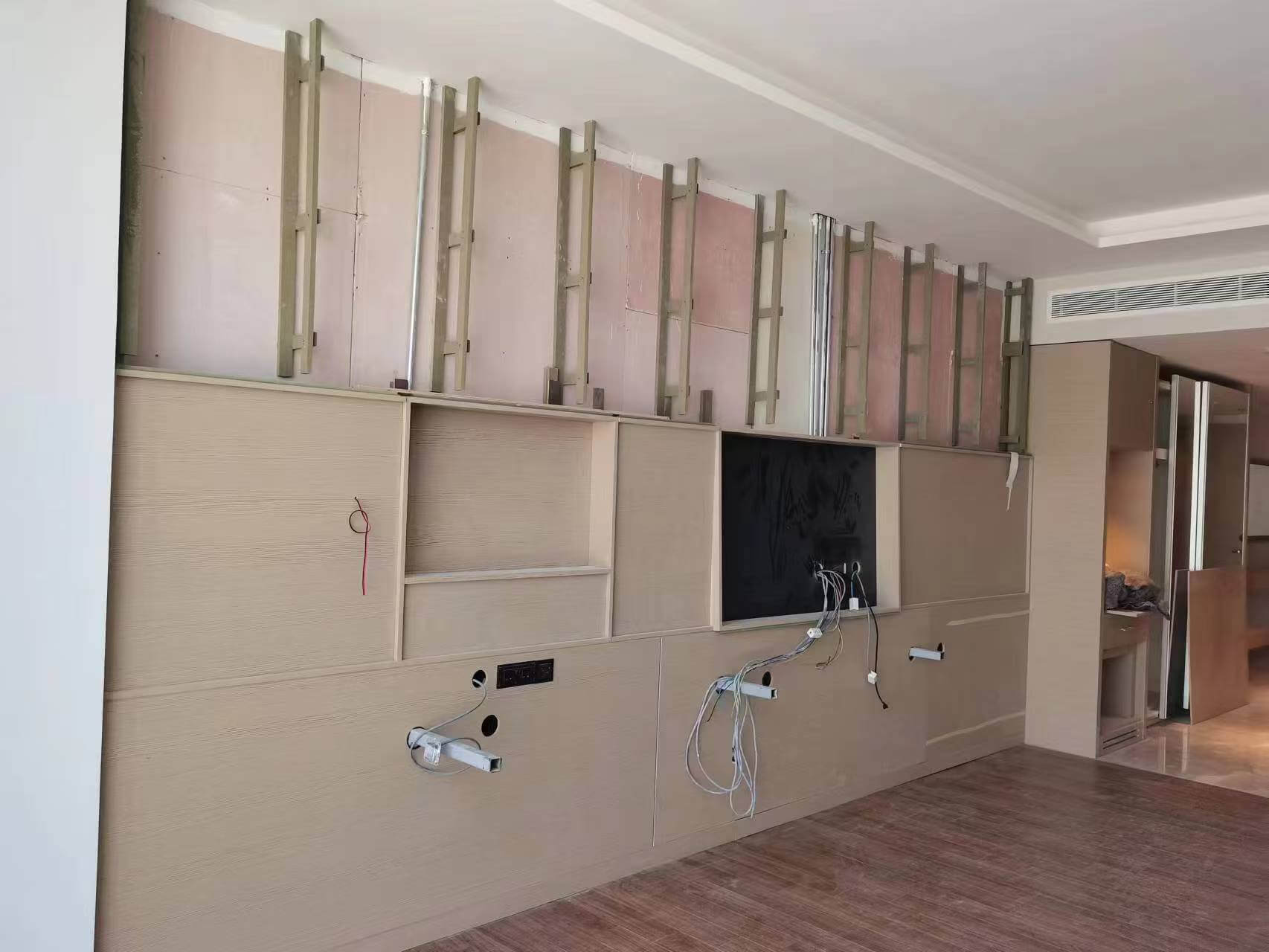
Typical hotel casegoods include:
- Headboards
- Nightstands
- Wardrobes
- Desks
- TV units
- Minibar cabinets
- Luggage racks
- Vanities
- Wall panels
- Fixed storage units
The main feature is that these items must match the room dimensions and design drawings. They often repeat across many rooms, so accuracy matters.
What Is Hotel Loose Furniture?
Loose furniture refers to movable pieces that are not normally fixed to the wall or built into the room. These products often include upholstery, solid wood frames, metal frames, foam, fabric or leather.
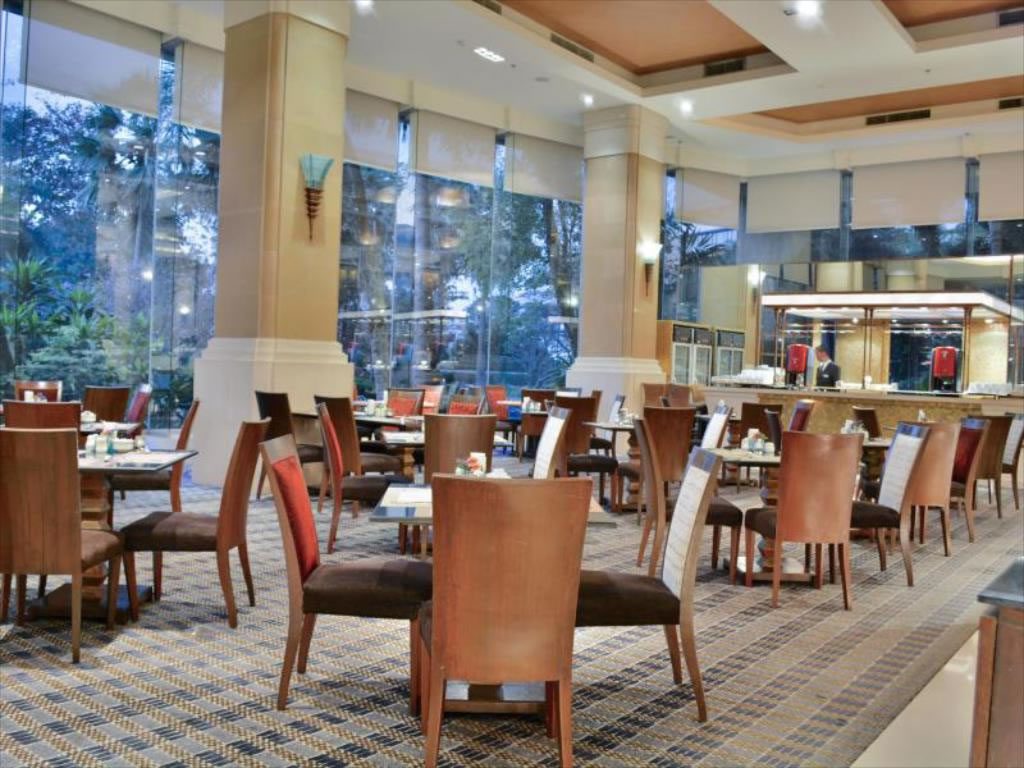
Typical loose furniture includes:
- Sofas
- Lounge chairs
- Desk chairs
- Dining chairs
- Bed benches
- Ottomans
- Coffee tables
- Side tables
- Public area seating
Loose furniture affects comfort and atmosphere. In public areas, it also carries a lot of visual weight because guests notice lobby sofas, lounge chairs and coffee tables immediately.
Why the Difference Matters for Procurement
Hotel casegoods and loose furniture have different quotation logic. Built-in pieces depend heavily on dimensions, material structure, finish, edge treatment and hardware. Loose furniture depends more on frame, foam, upholstery, stitching, comfort and fabric performance.
If a BOQ mixes everything without details, suppliers may quote based on assumptions. That makes price comparison difficult.
For public seating and lounge products, guide readers to hotel lobby furniture.
For better sourcing, separate your BOQ into:
| Category | Main Data Needed |
|---|---|
| Casegoods | Drawings, dimensions, material, finish, hardware, quantity |
| Loose furniture | Product photo, size, frame, foam, upholstery, fabric, quantity |
| Public area furniture | Layout, usage level, design style, material, upholstery, quantity |
| Fixed furniture | Site measurements, wall conditions, installation requirements |
This structure helps the supplier give a cleaner and more accurate quotation.
Drawings Are More Important for Built-In Furniture
Hotel casegoods are closely tied to construction and interior design. A wardrobe may need to fit around a wall. A headboard may need power outlet positions. A desk may coordinate with lighting, mirrors or wall panels.
Before production, these pieces usually require:
- Furniture drawings
- Shop drawings
- Material details
- Hardware confirmation
- Finish samples
- Installation notes
- Wall or room measurement checks
For new hotels, drawings may be stable. For renovations, site conditions can be less predictable. In renovation work, buyers should confirm measurements carefully before production.
Comfort Is More Important for Loose Furniture
Loose furniture still needs drawings and specifications, but comfort and touch matter more. A chair can look excellent in a photo and feel wrong in a guest room. A sofa can match the design but fail in public area use if the foam or fabric is not suitable.
For loose furniture, check:
- Seat height
- Seat depth
- Back angle
- Foam density
- Fabric durability
- Stitching quality
- Frame strength
- Cleaning method
- Fire requirements if applicable
If possible, approve a physical sample for key seating items.
Material Choices Are Different
Hotel casegoods often use plywood, MDF, veneer, laminate, lacquer and hardware. The goal is dimensional stability, finish consistency and long-term use.
Loose furniture may use solid wood, plywood frames, metal frames, foam, fabric, leather or synthetic leather. The goal is comfort, shape, durability and appearance.
Do not apply the same material logic to both categories. A durable laminate may be excellent for a desk surface, but it has nothing to do with the comfort of a lounge chair. A beautiful fabric may elevate a lobby sofa, but it will not solve the structure of a wardrobe.
Sample Approval Should Be Split
For built-in furniture, sample approval should focus on dimensions, finish, structure, hardware and edge details. For loose furniture, approval should focus on comfort, upholstery, stitching, frame stability and fabric.
A practical approval plan may include:
- One nightstand or wardrobe door sample for built-in pieces
- One finish board for veneer, lacquer or laminate
- One chair or sofa sample for loose furniture
- One metal or hardware sample if visible
- One packing sample for export projects
This keeps the approval process realistic without making too many samples.
Quality Control Points
For built-in furniture:
- Dimensions match drawings
- Finish color matches approved sample
- Edges are clean
- Doors and drawers align
- Hardware works smoothly
- Surface has no scratches
- Packing labels are correct
For loose furniture:
- Frame is stable
- Seat comfort matches approved sample
- Upholstery is clean and tight
- Seams are straight
- Fabric color matches sample
- Legs are level
- Packing protects corners and fabric
Clear QC points help prevent disputes before shipment.
Can One Manufacturer Supply Both?
Many hotel buyers prefer one supplier for both built-in room furniture and loose furniture because it reduces coordination. One supplier can align finishes, packaging, production timing and communication.
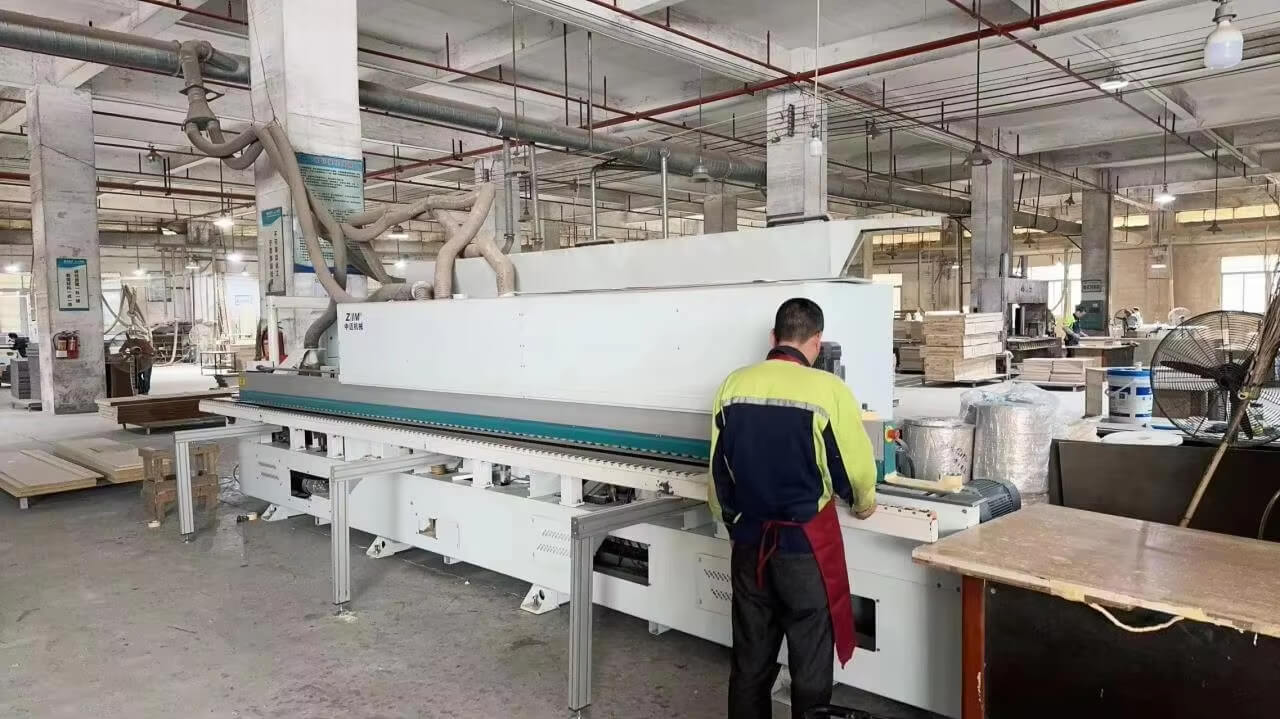
However, the supplier must have the right capability. Ask whether the factory produces both categories in-house or coordinates with trusted partners. Either can work, as long as quality control is clear.
CH Hotel Furniture’s product scope includes guest room furniture and public area furniture such as sofas, coffee tables, lounge chairs, bed stools, display units and chairs. This makes it suitable for buyers who want a combined [custom hotel furniture](/custom-hotel-furniture/) package.
For quality systems, buyers can use ISO 9001 as a reference when reviewing factory management documents, while still checking the supplier’s current certificates and actual QC process.
FAQ
What does hotel casegoods mean?
Hotel casegoods are built furniture pieces such as headboards, wardrobes, nightstands, desks, TV units and minibar cabinets, usually made according to project drawings.
Are sofas considered hotel casegoods?
No. Sofas are usually loose furniture because they are movable and often upholstered.
Should hotel casegoods be custom made?
For most hotel projects, yes. Casegoods usually need to match room dimensions, brand standards and interior design drawings.
Can one supplier produce casegoods and loose furniture?
Yes, if the supplier has the right production capability and quality control. This can simplify communication and delivery.
What should I send for a hotel casegoods quotation?
Send drawings, dimensions, BOQ, material requirements, finish references, hardware details, quantities and delivery destination.
Need both hotel casegoods and loose furniture for one project? Send your BOQ and drawings to CH Hotel Furniture for a coordinated quotation.
Related Posts