
Hotel wardrobe design affects much more than storage alone. It shapes how guests organize their…
How to Choose a Hospitality Millwork Manufacturer
A hospitality millwork manufacturer does far more than produce cabinets. In hotel projects, millwork often defines the structure and visual quality of the room. Wardrobes, vanities, TV panels, headboards, minibar units, wall cladding, and fixed joinery all depend on accurate production and good technical coordination. 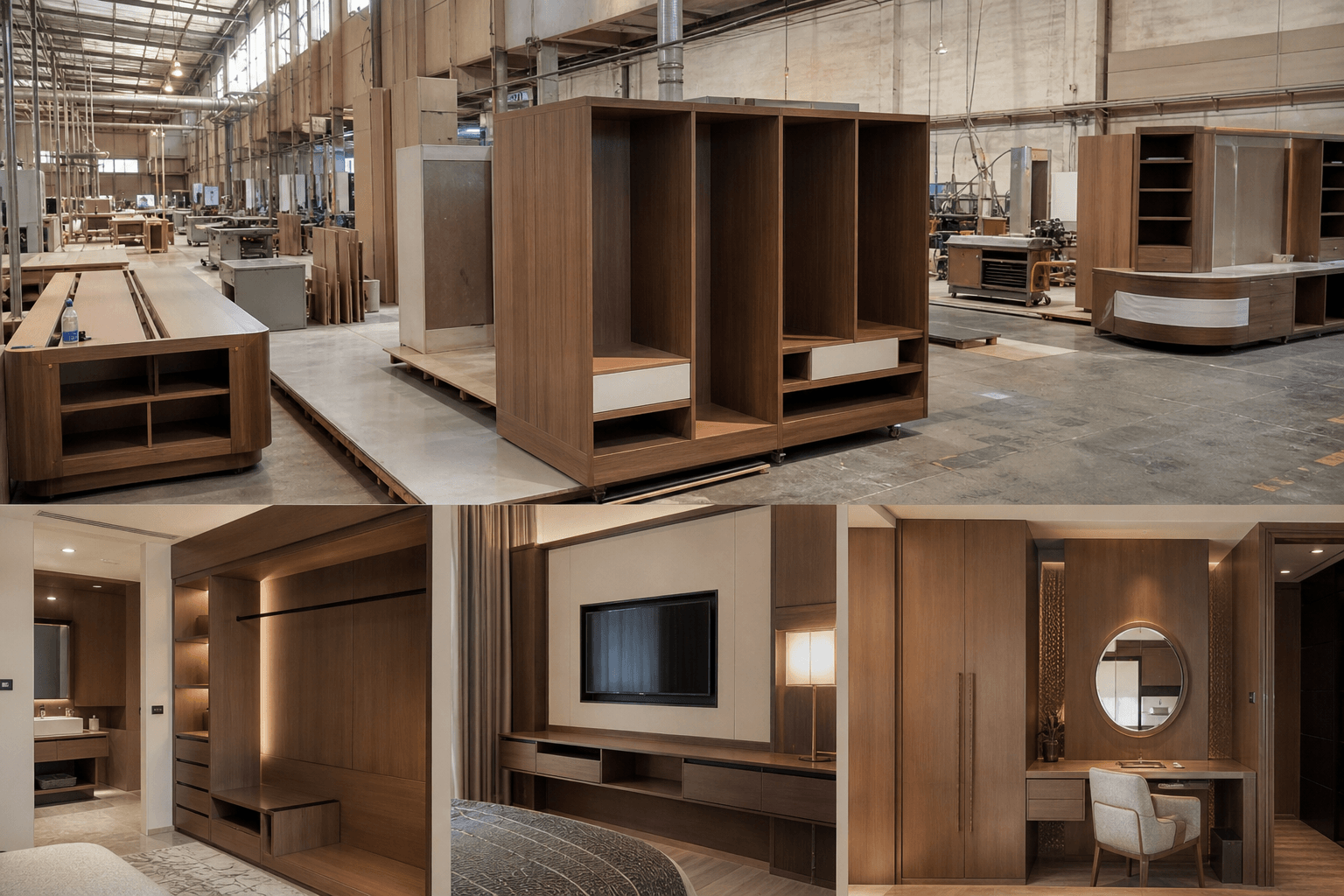
Choosing the right hospitality millwork manufacturer is not only about price. It is about whether the supplier can understand drawings, manage details, coordinate with site conditions, and maintain quality across the full project. In hospitality work, small millwork mistakes quickly become very visible because they connect directly with walls, floors, lighting, and guest use.
Why Millwork Quality Matters So Much in Hotels
Millwork is one of the most permanent parts of a hotel interior. Loose furniture can be moved or replaced more easily, but fixed joinery becomes part of the room itself. If the panel alignment is poor, the finish tone is inconsistent, or the fit on site is inaccurate, the final room quality suffers immediately.
That is why a hospitality millwork manufacturer should be evaluated on process as much as product. Strong suppliers do not only fabricate. They review dimensions, identify technical risks, clarify construction logic, and help the project team avoid preventable issues before production starts.
This is especially important in guest rooms, suites, serviced apartments, and public areas where the joinery connects multiple materials together. A beautiful design concept still needs buildable detailing behind it.
Drawings and Technical Review Are Essential
In hospitality projects, good drawings are part of good manufacturing. Shop drawings should do more than copy the design intent. They should translate the concept into workable construction, fixing methods, material transitions, and site coordination logic.
A capable hospitality millwork manufacturer should be able to explain how pieces will be built, packed, delivered, and installed. If a supplier cannot communicate clearly at the drawing stage, problems usually grow later during production or handover.

This also matters in renovation projects, where actual site conditions may differ from the original plan. Historical buildings, uneven walls, limited service access, and dimensional tolerance all require practical millwork thinking, not only factory output.
Material Consistency and Finish Control Should Be Checked Early
Millwork often involves veneer, laminate, paint, solid wood details, metal trims, stone transitions, and internal hardware. If these materials are not reviewed carefully, the project can lose consistency very quickly. The same veneer may look different under changing light, and painted finishes can fail if the specification is weak.
That is why sampling and mockup review matter. A strong supplier should be comfortable with finish boards, hardware confirmation, and detail approval before full production begins. This process is especially important for upscale hotel interiors where brand presentation depends heavily on finish quality.
Project Coordination Is Part of Manufacturer Capability
The best hospitality millwork manufacturer is usually the one that can support the broader project process, not only the workshop. Coordination with design teams, procurement teams, contractors, and site installation staff often determines whether a project runs smoothly.
Hotels are fast-moving projects with many linked trades. Joinery affects lighting, plumbing, wall finishing, access routes, and installation sequence. A manufacturer who understands that rhythm can prevent delays and reduce unnecessary adjustments later.
You can review hotel furniture manufacturing capability here. You can also browse custom hospitality products here. For broader hospitality industry insight, see Hospitality Net.
What does a hospitality millwork manufacturer produce?
They usually produce built-in hotel furniture such as wardrobes, vanities, wall panels, TV units, headboards, minibar cabinets, and other fitted interior elements.
Why is millwork important in hotel projects?
Millwork affects design consistency, room function, space efficiency, and the final visual quality of guest rooms and public areas.
What should buyers review before choosing a supplier?
They should review drawing ability, finish quality, hotel project experience, production control, and installation coordination support.
Is millwork especially important in renovation hotels?
Yes. Renovation projects often require more careful site measurement, construction adjustment, and technical coordination.
Related Posts